UX/UI design principles for creating user-friendly experiences

UX/UI design principles

UX/UI design principles lay the foundation for crafting compelling user experiences that resonate with audiences. In today’s digital landscape, understanding the interplay of aesthetics and functionality is crucial for designers aiming to engage users effectively. By embracing user-centered design approaches, we can create interfaces that not only look great but also enhance usability, making every interaction meaningful and enjoyable.

This exploration of UX/UI design principles delves into the core concepts shaping the industry. We’ll discover how to implement effective strategies that boost user engagement, as well as integrate these principles with marketing techniques to maximize impact. From conducting user research to developing wireframes, this journey will illuminate the steps necessary for successful design that meets both user needs and business goals.

Understanding UX/UI Design Principles

User experience (UX) and user interface (UI) design are two interrelated disciplines that focus on creating products that are not only functional but also enjoyable and engaging for users. Understanding the fundamental concepts of these areas is essential for anyone involved in the design process. This knowledge forms the backbone of developing products that meet users’ needs effectively while providing an aesthetically pleasing interaction.UX design revolves around enhancing user satisfaction by improving usability, accessibility, and pleasure in the interaction between the user and the product.

UI design, on the other hand, pertains to the look and feel of the product, encompassing the layout, visual elements, and overall aesthetic. Together, these principles guide designers in creating intuitive and attractive products.

Importance of User-Centered Design Approaches

User-centered design (UCD) focuses on involving the user throughout the design process, ensuring that the final product aligns with their needs and preferences. This approach is critical for several reasons:

  • Enhanced Usability: Products designed with user input are easier to navigate and use, which leads to higher satisfaction rates.
  • Reduced Development Costs: By identifying user needs early in the design phase, teams can avoid costly revisions later in the project lifecycle.
  • Increased User Engagement: When users feel their needs are being addressed, they are more likely to engage with the product and remain loyal to the brand.
  • Competitive Advantage: UCD can differentiate a product in a crowded market, offering unique solutions that resonate with users.

Interaction Between Aesthetics and Usability

The relationship between aesthetics and usability is a critical area of focus in UX/UI design. While usability ensures that users can accomplish their tasks effectively, aesthetics influences the user’s emotional response and overall experience. Striking a balance between these two aspects can significantly impact a product’s success.The following points illustrate the importance of this interaction:

  • Visual Hierarchy: Effective use of design elements such as size, color, and spacing guides users’ attention to essential features and actions.
  • Emotional Connection: A visually appealing interface can evoke positive feelings, increasing users’ willingness to interact with the product.
  • Brand Identity: Consistent aesthetics reinforce brand recognition and trust, fostering a deeper connection with users.
  • First Impressions: Research shows that users often form opinions about a product within seconds based on its visual design, making aesthetics crucial for initial engagement.

“Good design is as little design as possible.” – Dieter Rams

By understanding and applying these UX/UI design principles, designers can create products that not only serve functional purposes but also deliver exceptional experiences that resonate with users on a deeper level.

Implementing Effective UX/UI Strategies

UX/UI design principles

When it comes to enhancing user experience and interface design, employing effective strategies is essential for maximizing user engagement. By focusing on user needs and preferences, designers can create attractive and functional interfaces that resonate with their audience. This section dives into key approaches to improve user interactions, conduct user research, and develop wireframes and prototypes for testing ideas.

Improving User Engagement Through Design

Understanding how design influences user engagement is critical for any UX/UI project. Effective strategies can greatly increase user satisfaction and retention. Below are some key strategies to consider:

  • Consistency: Maintain uniformity in design elements such as colors, fonts, and layouts to help users navigate with ease.
  • Visual Hierarchy: Organize information in a way that guides users’ attention to the most important elements first.
  • Feedback Mechanisms: Provide users with immediate feedback when they perform actions, helping them understand the impact of their interactions.
  • Accessibility: Ensure that your design is usable by individuals with disabilities to broaden your audience reach.
  • Minimalism: Avoid clutter by utilizing whitespace effectively, allowing users to focus on key content without distractions.

User Research and Usability Testing Methods

Conducting user research and usability testing is vital for gathering insights and validating design decisions. This process helps identify user pain points and preferences. Here are several methods to consider:

  • Surveys and Questionnaires: Use these tools to gather quantitative data regarding user preferences and behavior.
  • User Interviews: Conduct one-on-one discussions to delve deeper into user needs and experiences.
  • Focus Groups: Engage groups of users to collect diverse insights on design concepts and usability.
  • A/B Testing: Compare two versions of a design to determine which one performs better in real-world scenarios.
  • Heuristic Evaluation: Assess your design against established usability principles to identify potential issues.

Creating Wireframes and Prototypes

Wireframes and prototypes are crucial tools in the UX/UI design process. They allow designers to visualize ideas and gather feedback before final implementation. Here’s a look at the process for creating effective wireframes and prototypes:

  • Define User Flows: Map out the steps users will take to complete tasks, ensuring a streamlined experience.
  • Sketch Initial Concepts: Create low-fidelity wireframes by hand or using software to Artikel the basic layout and functionality.
  • Add Detail Gradually: Transition to high-fidelity wireframes by adding design elements and interactivity.
  • Utilize Prototyping Tools: Use software like Figma, Sketch, or Adobe XD to build clickable prototypes that simulate the final product.
  • Conduct User Testing: Gather feedback on the wireframes and prototypes to identify areas for improvement before moving to the final design.

Integrating UX/UI Design with Marketing Techniques

In today’s digital landscape, the integration of UX/UI design with marketing techniques is not just beneficial—it’s essential. A well-crafted user experience and interface can significantly boost the effectiveness of marketing efforts, leading to increased engagement, conversions, and customer loyalty. Understanding how these elements work together can provide businesses with a competitive edge.

Role of UX/UI Design in Enhancing Search Engine Marketing Efforts

The synergy between UX/UI design and search engine marketing (SEM) is critical for optimizing online visibility and user engagement. A well-structured website design improves user experience, which in turn can enhance a site’s ranking on search engines due to lower bounce rates and increased time on site.

Website Speed

Fast-loading pages enhance user experience and are a ranking factor for search engines. For instance, Google considers page speed as a crucial metric, impacting both rankings and user satisfaction.

Mobile Responsiveness

With the rise of mobile users, responsive design ensures that websites function well on various devices, improving user engagement and search ranking.

Clear Navigation

Intuitive navigation helps users find what they need quickly, reducing frustration and encouraging them to interact more with the site, which is beneficial for SEM performance.

“A seamless user experience can enhance engagement metrics, which search engines use to evaluate site quality.”

Influence of Web Design on Social Media Marketing Campaigns

The design of a website can significantly impact the effectiveness of social media marketing campaigns. A visually appealing and user-friendly website can drive users from social media platforms to the site more effectively, fostering higher conversion rates.

Visual Consistency

Maintaining a consistent design across social media and the website reinforces brand recognition, making users more likely to engage with your content.

Call-to-Action Buttons

Strategically placed and well-designed CTAs can lead to higher click-through rates from social media posts to the website.

Shareable Content

A well-designed layout encourages users to share content from your site on social media, increasing organic reach and visibility.

Best Practices for Video Marketing Through UI Design

Video marketing has emerged as a powerful tool in digital marketing strategies, and effective UI design can enhance its impact. A well-structured video interface can improve user interaction and viewing enjoyment.

Engaging Thumbnails

Thumbnails that are visually appealing and aligned with the brand can draw users in. For example, vibrant colors and clear text can capture attention more effectively.

Easy Navigation

Ensure viewers can easily access related videos or content through clear UI elements. Implementing ‘next video’ buttons can keep viewers engaged on the platform longer.

Responsive Design

Videos should be designed to look good on all devices. This can improve user experience and lead to higher retention rates.

“Effective UI design can transform a simple video into an engaging storytelling experience, enhancing viewer retention and interaction.”

Outcome Summary

UX/UI design principles

In conclusion, mastering UX/UI design principles is more than just applying techniques; it’s about understanding users and crafting experiences that resonate. As we integrate these strategies with marketing efforts, the potential for creating impactful interactions grows exponentially. Whether you’re a seasoned designer or just starting, embracing these principles will ensure your work stands out in a crowded digital space, ultimately leading to greater user satisfaction and engagement.

Answers to Common Questions

What is the difference between UX and UI?

UX refers to user experience, focusing on the overall feel and ease of use of a product, while UI refers to user interface, which deals with the specific visual design elements.

Why is user-centered design important?

User-centered design is critical because it prioritizes the needs and preferences of users, leading to products that are more intuitive and enjoyable to use.

How can I improve my UX/UI design skills?

You can enhance your skills by practicing design principles, conducting usability tests, seeking feedback, and staying updated on industry trends.

What role does research play in UX/UI design?

Research is fundamental in UX/UI design as it helps designers understand user needs, behaviors, and pain points, informing better design decisions.

How often should I conduct usability testing?

Usability testing should be conducted regularly throughout the design process, especially after significant changes or before launching a new product.
Video streaming quality optimization for better viewing

Video streaming quality optimization

Video streaming quality optimization is an essential aspect of today’s digital landscape, where viewers expect seamless and high-quality experiences. Understanding the various factors that influence streaming performance can help creators and marketers alike to enhance viewer satisfaction and engagement. From bandwidth considerations to device-specific optimizations, this topic delves into the intricate details of delivering top-notch video content.

By exploring compression techniques and strategic enhancements for different devices, we can gain valuable insights into how to make video streaming not only more efficient but also more enjoyable for audiences. Whether it’s a mobile phone, smart TV, or desktop computer, optimizing video quality is crucial to keeping viewers hooked and coming back for more.

Video Streaming Quality Factors

Video streaming quality is influenced by various technical and environmental factors. Understanding these elements is crucial for both users and providers aiming for an optimal streaming experience. In this discussion, we’ll delve into the primary factors affecting video streaming quality, including bandwidth and the significance of compression techniques in enhancing video performance.

Impact of Bandwidth on Streaming Performance

Bandwidth refers to the maximum rate at which data can be transmitted over an internet connection. It plays a vital role in determining the smoothness and quality of video playback. Higher bandwidth allows more data to be transferred simultaneously, which is essential for streaming high-definition (HD) or ultra-high-definition (UHD) content.The relationship between bandwidth and video quality can be summarized by the following key points:

  • Higher bandwidth enables streaming services to deliver content in higher resolutions, such as 4K and beyond.
  • Insufficient bandwidth leads to buffering, pixelation, and overall poor viewing experiences.
  • During peak usage times, bandwidth can become congested, affecting video quality, even for users with previously stable connections.

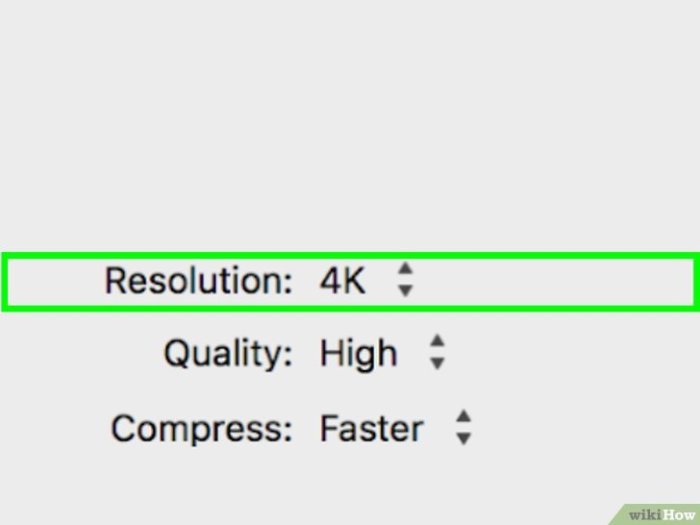
To ensure optimal streaming, users are encouraged to have a minimum bandwidth of 25 Mbps for 4K content, while HD streaming typically requires about 5 Mbps.

Role of Compression Techniques in Optimizing Video Quality

Compression techniques are essential in video streaming as they reduce the file size of video content without significantly compromising quality. This process makes it feasible to deliver high-quality video over limited bandwidth, ensuring a smoother streaming experience.The main compression techniques include:

  • Lossy Compression: This method reduces file size by removing some data deemed less critical to the overall quality. Common codecs such as H.264 and H.265 implement this technique, allowing for efficient streaming.
  • Lossless Compression: Although less common for streaming, this technique retains all original data. It is usually employed for archiving or professional video editing.

Effective compression not only enhances streaming quality but also reduces loading times, which greatly improves user satisfaction. For example, using H.265 can reduce file sizes by up to 50% compared to its predecessor, H.264, while maintaining similar quality levels.

The efficiency of compression techniques is crucial, as they enable high-quality video streaming even under varying bandwidth conditions.

Optimizing Video Streaming for Different Devices

Video streaming quality optimization

In today’s digital landscape, video streaming has become an essential part of our daily lives, whether for entertainment, education, or social interaction. Different devices present unique challenges and opportunities for video streaming quality. By understanding how to optimize streaming across mobile devices, smart TVs, and desktop computers, users can enhance their viewing experience significantly. Let’s explore effective strategies tailored to each device.

Mobile Device Streaming Optimization

Mobile devices, such as smartphones and tablets, are widely used for streaming due to their convenience. However, users often encounter issues like buffering and poor video quality. To tackle these challenges, consider the following strategies:

  • Use Adaptive Bitrate Streaming: This technology automatically adjusts video quality based on the user’s network conditions, ensuring smooth playback across varying connection speeds.
  • Optimize Video Formats: Choose formats like H.264 or HEVC, which provide high-quality video at lower bitrates, conserving bandwidth while enhancing playback quality.
  • Limit Background Data Usage: Encourage users to close unused apps and disable background data for non-essential services, freeing up bandwidth for streaming.
  • Implement Offline Viewing: Offer options for users to download videos for offline viewing, reducing reliance on unstable connections and improving overall experience.

Smart TV Video Quality Enhancement

Smart TVs offer a larger screen experience, making video quality paramount. Optimizing streaming for these devices can enhance viewer satisfaction significantly. Here are key techniques for ensuring the best possible streaming on smart TVs:

  • Enable High Dynamic Range (HDR): Ensure that the content supports HDR, which enhances color and contrast, providing a more lifelike viewing experience.
  • Utilize Ethernet Connections: Whenever possible, connect the TV directly to the router using an Ethernet cable instead of relying on Wi-Fi to reduce lag and improve speed.
  • Update Software Regularly: Keep the TV’s firmware and streaming apps updated to benefit from the latest features and performance improvements.
  • Adjust Picture Settings: Optimize the TV’s picture settings for streaming, such as reducing motion smoothing and adjusting brightness levels for the best visual output.

Desktop Computer Streaming Improvements

Desktop computers often provide the most powerful streaming capabilities, yet users may still face challenges such as buffering or lag. To enhance the streaming experience on desktops, consider implementing these methods:

  • Upgrade Internet Speed: A higher bandwidth can significantly reduce buffering times, especially for HD and 4K streaming.
  • Clear Browser Cache: Regularly clear the cache and cookies in your web browser to ensure optimal performance and quick access to streaming content.
  • Use a Wired Connection: Similar to smart TVs, using a wired Ethernet connection can eliminate Wi-Fi interference and provide a more stable streaming experience.
  • Choose the Right Browser: Some browsers are better optimized for video playback than others. Research and select one that offers superior streaming performance.

Integrating Video Streaming with Marketing Strategies

Video streaming quality optimization

In today’s digital landscape, video marketing has emerged as a powerful tool in enhancing viewer engagement and driving brand awareness. With the increase in consumption of video content across various platforms, businesses must integrate video streaming into their marketing strategies to captivate their audiences. Effective use of video not only boosts engagement but also fosters a deeper connection with potential customers.One of the most significant advantages of video marketing is its ability to tell a story and evoke emotions.

By leveraging this medium, brands can create memorable content that resonates with their audience. The impact of video marketing is evident in successful campaigns across social media platforms, where engaging video content leads to greater interaction and sharing.

Examples of Effective Social Media Campaigns Using Video Content

Numerous brands have harnessed the potential of video to create engaging social media campaigns. These campaigns effectively capture attention and encourage audience interaction, thus enhancing brand visibility. Here are notable examples:

  • Red Bull: Known for its adrenaline-pumping video content, Red Bull’s campaigns often feature extreme sports and adventurous lifestyles, captivating its audience and aligning perfectly with its brand image.
  • GoPro: GoPro utilizes user-generated content to showcase the capabilities of its cameras. By sharing videos from real users, the brand not only garners trust but also builds a community around its products.
  • Dove: The “Real Beauty” campaign effectively used video to challenge beauty stereotypes. By showcasing real women and their stories, Dove created a strong emotional connection with its audience, leading to widespread engagement.

These examples illustrate how brands can utilize video content to not only promote their products but also connect with their audience on a deeper level.

Using Site Promotion Techniques to Boost Video Visibility

To maximize the reach of video content, employing effective site promotion techniques is essential. These strategies not only improve visibility but also enhance the overall user experience. Below are some crucial methods to consider:

  • Optimization: Implementing video involves using relevant s in titles, descriptions, and tags. Additionally, creating transcripts for videos can improve search engine visibility, making it easier for potential viewers to discover the content.
  • Social Sharing: Encouraging viewers to share video content on their social media channels can significantly boost visibility. Incorporating social share buttons and call-to-action prompts within the video can facilitate this process.
  • Embedding Videos: Integrating videos into blog posts or web pages not only enhances the content but also keeps visitors on the site longer. This can lead to improved rankings and increased viewer retention.
  • Email Marketing: Including video content in email newsletters can lead to higher open and click-through rates. A well-placed video thumbnail can entice recipients to engage with the content, driving traffic to the website.

By implementing these site promotion techniques, businesses can significantly enhance the visibility of their video content, ensuring it reaches a broader audience and achieves the desired marketing objectives.

Concluding Remarks

In conclusion, effectively optimizing video streaming quality plays a pivotal role in ensuring that viewers have a satisfying experience, which in turn can lead to increased engagement and loyalty. By addressing factors such as bandwidth, device compatibility, and marketing integration, we can create a holistic approach to video streaming that captivates audiences. As the digital world continues to evolve, mastering these strategies will be key to maintaining a competitive edge in video content delivery.

FAQ Overview

What are the key factors that affect video streaming quality?

Bandwidth, compression techniques, device compatibility, and network stability are the main factors impacting streaming quality.

How does bandwidth influence streaming performance?

Higher bandwidth allows for smoother playback and better video quality, while lower bandwidth can lead to buffering and lower resolution.

What compression techniques can be used to optimize video quality?

Techniques such as H.264, H.265, and VP9 can significantly reduce file size while maintaining quality, enhancing streaming efficiency.

How can video streaming be optimized for mobile devices?

Strategies include adapting resolution for different screen sizes, using adaptive bitrate streaming, and optimizing loading times.

Why is video marketing important for viewer engagement?

Video marketing captures attention more effectively than static content, fostering a deeper connection and encouraging viewer interaction.

Live video streaming trends shaping the future

Streaming live video

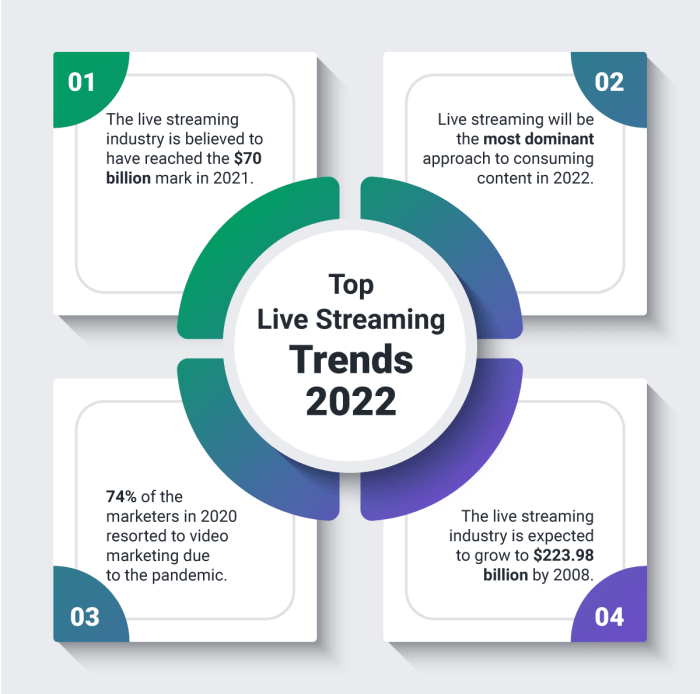
Live video streaming trends are rapidly transforming the way we consume content, interact with brands, and connect with the world. As technology evolves, new capabilities and platforms emerge, making live streaming an increasingly vital component of digital communication.

From the influence of 5G technology enhancing streaming quality to the integration of AI and machine learning improving user experiences, the landscape is shifting. Moreover, platforms like Twitch, YouTube Live, and Facebook Live are competing fiercely, each offering unique features that cater to diverse audiences, while innovative marketing strategies are paving the way for effective promotion and audience engagement.

Emerging Technologies in Live Video Streaming

As live video streaming continues to evolve, emerging technologies are playing a significant role in shaping its future. The integration of advanced technologies such as 5G, artificial intelligence (AI), machine learning, augmented reality (AR), and virtual reality (VR) is enhancing the quality and interactivity of live video experiences. This discussion focuses on these transformative technologies and their impacts on the streaming landscape.

Impact of 5G Technology on Live Video Streaming Capabilities

The advent of 5G technology is a game changer for live video streaming, offering unprecedented speed and connectivity. This next-generation network enables seamless streaming of high-definition content without buffering, which is crucial for real-time engagement. With 5G, content creators can provide viewers with high-quality experiences regardless of their location. G’s low latency allows for real-time interactivity, enabling features such as live polls and instant viewer feedback during streams.

This level of engagement was previously challenging with older networks. The ability to stream 4K and even 8K video content becomes feasible, opening new avenues for immersive experiences.

AI and Machine Learning Integration in Live Streaming Platforms

Artificial intelligence and machine learning are becoming integral to the enhancement of live streaming platforms. These technologies empower platforms to deliver personalized content recommendations, optimizing user engagement by analyzing viewer behavior and preferences. AI-driven analytics help streamers understand their audience better, allowing for the customization of content and marketing strategies. Automated moderation tools use machine learning to detect inappropriate content in real-time, ensuring a safe viewing environment.

“AI algorithms are revolutionizing the way we interact with live video, making experiences more tailored and engaging.”

Role of Augmented and Virtual Reality in Enhancing Live Video Experiences

Augmented reality and virtual reality technologies are significantly enhancing viewer experiences in live video streaming. AR overlays allow viewers to engage with additional content while watching live streams, such as statistics during sports broadcasts or interactive graphics during presentations. VR takes this a step further by immersing viewers in a fully interactive environment, making them feel as though they are present at the event.

For instance, virtual concerts enable fans to experience live performances from the comfort of their homes, breaking geographical barriers.As these technologies continue to advance, they present new opportunities for content creators to innovate and engage audiences in ways previously thought impossible.

Popular Platforms and Their Features

Streaming live seo strategy overall namely term visibility marketing brand long

Live video streaming has surged in popularity, with various platforms offering unique features that cater to diverse audiences and content creators. Each of these platforms brings something distinct to the table, making them suitable for different types of streamers and viewers. Understanding these features can significantly enhance the streaming experience and audience engagement.

Platform-Specific Features

When analyzing major live video streaming platforms, it’s essential to recognize the unique features that set each apart. Here’s a quick overview:

  • Twitch: Primarily focused on gaming, Twitch boasts features like customizable channel layouts, subscriber-only chats, and advanced moderation tools. The platform also offers extensions that enhance interactivity, such as polls and viewer rewards, making it ideal for streamers engaging with a gaming audience.
  • YouTube Live: A robust platform that allows streaming alongside on-demand video content. Features include HD streaming, live chat, and the ability to monetize through Super Chats and channel memberships. YouTube Live also provides analytics tools that help streamers understand viewer behavior better.
  • Facebook Live: Integrated within the social media giant, Facebook Live allows for easy sharing and promotion among friends and communities. Key features include real-time engagement through comments, reactions, and the ability to schedule live broadcasts. This platform is great for content creators looking to connect with audiences directly within their social network.

Audience Engagement Tools

Effective audience engagement is crucial for successful streaming, and different platforms offer varied tools to facilitate this interaction. Here’s a comparison of audience engagement tools provided by these platforms:

  • Twitch: Offers numerous engagement options, including interactive overlays, channel points that viewers can earn and redeem, and extensions that allow viewers to participate in games and polls, fostering a sense of community.
  • YouTube Live: Features a live chat function that can be moderated by the streamer or assigned moderators. Chat capabilities include the use of emojis and Super Chats, where viewers can pay to have their messages highlighted, making it a powerful tool for engagement.
  • Facebook Live: Provides a straightforward comment section that allows viewers to interact during the stream. Its unique advantage is the ability to leverage Facebook’s social features, encouraging shares and reactions that can boost visibility and engagement.

Monetization Options

Monetization options are a significant aspect of live video streaming, influencing a streamer’s choice of platform. Here’s how each platform supports creators in generating revenue:

  • Twitch: Offers multiple monetization avenues, including subscriptions, Bits (virtual goods viewers can purchase to cheer for streamers), and ad revenue. Additionally, Twitch’s Partnership and Affiliate programs provide creators with enhanced earning potential.
  • YouTube Live: Allows monetization through Super Chats, channel memberships, and ad revenue. Streamers can also earn through YouTube’s Partner Program, which shares revenue from ads shown during streams.
  • Facebook Live: While monetization options are more limited compared to others, creators can earn through ad breaks during live streams and receive direct support from fans via Facebook Stars, which viewers can purchase and send to their favorite creators.

Marketing and Promotion Strategies for Live Video

Promoting live video events effectively is crucial for maximizing audience reach and engagement. A strategic approach to marketing can significantly enhance visibility, participation, and viewer retention. Leveraging various platforms and tools is essential to create buzz around your live streaming events and ensure they attract the right audience.

Leveraging Social Media for Promoting Live Streaming Events

Utilizing social media platforms to promote live streaming events can lead to increased viewer engagement and participation. Social media allows for real-time interaction and engagement, which enhances the overall viewing experience. Here are key strategies for effectively using social media:

  • Pre-Event Teasers: Create short, engaging teaser videos or countdown posts to build anticipation.
  • Event Page Creation: Set up dedicated event pages on platforms like Facebook and LinkedIn, providing all necessary details.
  • Engage with Audience: Encourage followers to ask questions or share what they are excited about regarding the event.
  • Utilize Stories and Live Features: Use Instagram Stories or Facebook Live to give sneak peeks or behind-the-scenes content leading up to the event.
  • Cross-Promotion: Promote the event across different social media channels simultaneously to maximize reach.

Optimizing Video Titles and Descriptions for Search Engine Visibility

Optimizing video titles and descriptions is essential for enhancing discoverability on search engines and platforms like YouTube. Well-crafted titles and descriptions can improve your video’s ranking and attract more viewers. Here’s a checklist for optimization:

  • Research: Identify relevant s that potential viewers are likely to search for.
  • Clear and Concise Titles: Aim for titles that are engaging yet informative, ideally under 60 characters.
  • Descriptive Text: Use the first 150 characters of your description to provide a summary, including s.
  • Include Hashtags: Incorporate relevant hashtags at the end of your description to enhance search visibility.
  • Call to Action: Encourage viewers to like, subscribe, and share your video within the description.

Collaborating with Influencers to Boost Live Video Reach

Collaborating with influencers can significantly amplify your live streaming event’s reach. Influencers have established audiences that trust their recommendations, making them valuable partners for promotions. Here’s how to effectively collaborate with influencers:

  • Identify Relevant Influencers: Find influencers whose audience aligns with your target market and content niche.
  • Define Collaboration Terms: Clearly Artikel expectations, including promotion methods and content integration.
  • Leverage Influencers’ Platforms: Encourage influencers to promote the event across their social media channels, blogs, or podcasts.
  • Engage During the Stream: Involve influencers during the live event, allowing them to interact with the audience and provide their insights.
  • Post-Event Promotion: Ask influencers to share highlights or key takeaways after the event to maintain engagement.

Conclusive Thoughts

Streaming live video

In conclusion, the future of live video streaming is bright and brimming with opportunities. As emerging technologies and creative marketing approaches continue to shape industry practices, understanding these trends will be essential for content creators and brands alike. Embracing these changes allows for enhanced viewer experiences and potential monetization strategies, ensuring that live video remains a prevalent force in the digital world.

Query Resolution

What is the impact of 5G on live video streaming?

5G technology significantly improves streaming quality by providing faster data speeds and lower latency, allowing for smoother and more reliable live broadcasts.

How does AI enhance live video streaming?

AI is used for various functions, such as real-time video enhancement, audience analysis, and automated moderation, improving overall user experience.

What are some monetization options for streamers?

Streamers can earn revenue through advertisements, subscriptions, donations, and exclusive content sales across various platforms.

How can social media boost live video engagement?

Leveraging social media for promotion helps reach wider audiences, encourages interaction, and creates buzz around live events through shares and comments.

What audience engagement tools are available on streaming platforms?

Many platforms offer tools like chat features, polls, and viewer interactions that enable streamers to engage their audience in real-time.

Social media crisis management strategies for brands

Social media crisis management

Social media crisis management is a crucial aspect that every brand must master in today’s digital landscape. The speed at which information spreads on these platforms means that a small misstep can escalate into a full-blown crisis in no time. Understanding how to navigate these waters not only protects a brand’s image but can also enhance customer trust when handled well.

By examining successful case studies and integrating proactive strategies, brands can prepare themselves for potential pitfalls. The need for effective communication during crises is paramount, as it shapes public perception and influences customer loyalty. This guide delves into essential strategies and best practices that can help brands survive and thrive in turbulent times.

Importance of Social Media Crisis Management

Social media crisis management

In today’s digital age, social media serves as a double-edged sword for brands. While it offers immense opportunities for engagement and growth, it also presents significant risks. Proactive social media crisis management strategies are vital for brands to navigate potential pitfalls and protect their reputation. A well-crafted response can make a world of difference when a crisis strikes, highlighting the importance of being prepared.Effective social media crisis management ensures that brands can respond swiftly and appropriately to negative events, safeguarding their image and maintaining customer trust.

Companies that have successfully navigated social media crises offer valuable lessons for others. For instance, the incident involving JetBlue in 2007, when a massive snowstorm caused extensive flight delays, showcased the brand’s commitment to communication. JetBlue’s use of social media to keep customers informed and offer compensation helped to mitigate backlash and restore customer faith.

Consequences of Poor Crisis Management

In contrast, brands that fail to effectively manage crises on social media can face dire repercussions. Poorly handled situations can lead to damaged reputations, loss of customer loyalty, and even severe financial consequences. The fallout from a crisis can linger, affecting both current and future customers’ perceptions.The ramifications of inadequate crisis management can be illustrated through notable examples. For instance:

  • United Airlines: The 2017 incident where a passenger was forcibly removed from an overbooked flight resulted in widespread outrage. The airline’s initial response was criticized for being insensitive, leading to a significant decline in customer trust.
  • Pepsi: The controversy over a 2017 advertisement perceived as tone-deaf during social justice movements resulted in backlash and a hasty retraction. This incident highlighted the need for brands to be mindful of social contexts in their marketing efforts.

Failure to address crises effectively can lead to long-lasting damage to a brand’s reputation and customer trust.

Overall, the lessons from these situations emphasize the necessity of having a robust crisis management plan in place. By being proactive and prepared, brands can not only navigate crises more smoothly but also enhance their reputation in the eyes of consumers.

Strategies for Effective Crisis Response on Social Media

Social media crisis management

In today’s digital landscape, social media can amplify both positive and negative messages about a brand at an astonishing rate. When a crisis occurs, the way a brand responds can significantly impact its reputation and customer trust. Therefore, having a well-structured crisis response strategy is essential for navigating challenging situations effectively.To manage a crisis on social media, brands should take a series of strategic steps to ensure their responses are timely and appropriate.

The following measures are critical to effectively manage a crisis when it arises on social media platforms.

Steps to Take When a Crisis Arises

When a crisis emerges, swift action is paramount. Here are the key steps brands should follow:

1. Acknowledge the Situation

Recognizing the issue promptly and publicly is the first step. This shows stakeholders that the brand is aware and concerned.

2. Gather Information

Investigate the situation thoroughly to understand the facts, context, and impact. Accurate information is crucial for crafting an appropriate response.

3. Develop a Response Team

Assemble a cross-functional team that includes marketing, PR, and legal representatives to manage the crisis effectively and ensure cohesive communication.

4. Craft a Clear Message

Use clear, concise language to address the issue, focusing on empathy and understanding while avoiding jargon or defensiveness.

5. Monitor Feedback

Keep an eye on public reactions and feedback on social media to adapt the response as necessary and address any misconceptions.

6. Implement the Response

Once the message is crafted, communicate it across all relevant social media channels and ensure consistency.

7. Follow Up

After the initial response, continue to provide updates as necessary and demonstrate that the brand is taking actionable steps to address the issue.

Monitoring Social Media Channels for Potential Crises

Being proactive in monitoring social media channels can help brands identify potential crises before they escalate. Implementing effective monitoring strategies is crucial for this purpose. Here are the best practices for keeping an ear to the ground:

Use Social Listening Tools

Leverage tools like Hootsuite, Brand24, or Sprout Social to track brand mentions, s, and sentiment analysis across various platforms.

Set Up Alerts

Create alerts for any s related to potential issues or crises, including your brand name, product names, and relevant hashtags.

Regularly Review Feedback

Dedicate time to review customer comments, reviews, and messages to gauge public sentiment and address concerns early.

Engage with Your Audience

Actively interacting with your audience can help build relationships that may cushion against backlash in crisis situations.

Checklist for Crafting Timely Responses to Customer Complaints

Having a checklist can streamline the process of responding to customer complaints or negative comments on social media. Here’s a practical guide to ensure responses are effective and prompt:

Timeliness

Respond within a specified timeframe (e.g., within one hour) to show that you value customer feedback.

Empathy First

Begin with an empathetic acknowledgment of the customer’s feelings or experience.

Provide Accurate Information

Share relevant details about the issue while avoiding defensiveness.

Offer Solutions

Clearly state what actions will be taken to resolve the issue or make amends.

Invite Further Discussion

Encourage the customer to reach out via direct message or email for a more personalized resolution.

Follow-Up

After the initial response, follow up to ensure the issue has been resolved satisfactorily.

Document the Interaction

Keep records of complaints and responses to identify patterns and improve future crisis management strategies.

“Effective crisis management requires preparation, swift action, and ongoing communication to maintain trust and credibility.”

Integration with Other Digital Marketing Strategies

Social media crisis management isn’t just a standalone function; it’s deeply intertwined with other digital marketing strategies. Understanding this integration can significantly enhance the effectiveness of your crisis response, making it a vital consideration for businesses today. By leveraging various channels, a brand can ensure that its crisis communication is more cohesive and far-reaching.

Interrelation with Search Engine Marketing and Site Promotion

Effective crisis management on social media can complement search engine marketing (SEM) and site promotion strategies. When a crisis unfolds, the way it is communicated online can influence search engine results and brand visibility. For instance, timely and transparent communication on social media can lead to positive narratives overshadowing negative search results. Brands should be proactive in optimizing their content for search engines during a crisis by:

  • Utilizing targeted s related to the crisis in press releases and social media posts.
  • Creating a dedicated crisis management webpage that includes FAQs, updates, and resources.
  • Engaging with online communities and forums to steer conversations towards constructive dialogue.

This approach not only informs audiences but also helps maintain brand reputation across search engines.

Role of Social Bookmarking and Social Networking

Social bookmarking and social networking platforms play critical roles in disseminating crisis information. During a crisis, quick sharing of updates can mitigate misinformation and control the narrative. Utilizing platforms such as Reddit, Digg, and various social media channels allows brands to:

  • Share real-time updates and official statements to a broad audience swiftly.
  • Encourage users to bookmark important pages for easy access to information.
  • Engage influencers or community leaders to share the brand’s perspective to build credibility.

This multi-channel approach not only amplifies the message but also creates a network of support and understanding among stakeholders.

Comprehensive Approach with Video Marketing and Web Development

Video marketing and web development can enhance the effectiveness of a crisis management plan. Incorporating video content into your strategy allows for more personal communication that can help humanize the brand during challenging times. Here’s how to effectively integrate these elements:

  • Produce video messages from executives addressing the crisis directly, demonstrating transparency and accountability.
  • Create informative videos that summarize the brand’s response steps and future prevention strategies.
  • Ensure your website’s infrastructure is robust enough to handle increased traffic from crisis-related inquiries while providing easy navigation to crisis-related content.

By utilizing video and strong web development practices, brands can create an engaging and informative experience that guides audiences through the crisis, ultimately fostering trust and loyalty.

Effective integration of social media crisis management with other digital marketing strategies can transform potential setbacks into opportunities for brand resilience.

Wrap-Up

In conclusion, effective social media crisis management is not just about damage control; it’s an opportunity for brands to demonstrate their commitment to transparency and customer care. By proactively preparing for possible crises and learning from past experiences, companies can reinforce their reputation and build stronger relationships with their audience. The right strategies and tools can turn a challenging situation into a chance for growth and improvement.

Questions Often Asked

What is social media crisis management?

It is the process of handling and addressing issues that arise on social media platforms that could potentially harm a brand’s reputation.

Why is social media crisis management important?

It helps brands mitigate negative impacts, maintain customer trust, and protect their reputation during unexpected events.

How can I prepare for a social media crisis?

Establish a crisis management plan, monitor social channels, and train your team on how to respond effectively.

What are common mistakes in social media crisis management?

Ignoring the issue, delaying responses, or failing to communicate transparently can exacerbate a crisis.

Can social media crises be beneficial?

Yes, if managed well, they can demonstrate a brand’s commitment to resolving issues and improve customer loyalty.

Content clusters and topic authority building strategies

Content clusters and topic authority

Content clusters and topic authority are pivotal concepts in the digital landscape that not only streamline your content creation process but also enhance your visibility on search engines. Imagine the power of grouping related content around a core topic; it not only establishes your expertise but also makes it easier for both users and search engines to navigate your information.

This approach effectively builds a robust framework for understanding how topics interconnect, thus boosting your website’s authority. By weaving together various pieces of content that revolve around a central theme, you create a comprehensive resource that appeals to your audience and ranks better in search results.

Content Clusters and Topic Authority

Content clusters are a strategic approach to organizing content on a website that enhances the site’s authority on specific topics. By grouping related content together, these clusters not only help in providing comprehensive information to users but also signal to search engines that the site is a credible source on those subjects. This method leads to improved search engine rankings and higher visibility in search results.The concept of content clusters revolves around a central pillar page that offers a broad overview of a topic, while individual cluster content delves into specific s linked to that pillar.

This interconnectedness fosters a better user experience, as visitors can easily navigate between related articles, deepening their understanding of the subject matter. Additionally, search engines recognize this structure as a sign of topic authority, which can lead to higher rankings.

Relationship Between Content Clusters and Improved Search Engine Ranking

Effective content clusters play a crucial role in enhancing search engine rankings. By establishing a clear hierarchy of information, search engines can easily crawl and index the content, improving the likelihood that it will appear in relevant search results. The following points illustrate how content clusters can directly influence rankings:

  • Increased Internal Linking: Content clusters encourage linking between related articles, which helps spread link equity throughout the site and improves overall .
  • Enhanced User Engagement: By providing a comprehensive set of related content, users are more likely to stay longer on the site, reducing bounce rates and signaling to search engines that the content is valuable.
  • Optimization: Well-structured content clusters allow for better targeting of s, ensuring that both the pillar and cluster content are optimized for search queries.
  • Authority Building: As more high-quality content is added to a cluster, the website is perceived as an authoritative source on the topic, which can lead to higher rankings and more backlinks from other credible sites.

Best Practices for Creating Effective Content Clusters

To create robust content clusters that effectively build topic authority, certain best practices should be followed. These practices help ensure that the content is not only informative but also strategically aligned for .The following guidelines Artikel the essential practices for developing effective content clusters:

  • Identify Core Topics: Begin with thorough research to identify core topics relevant to your audience and industry.
  • Create a Comprehensive Pillar Page: Develop a detailed pillar page that serves as the central hub for your topic, providing an overview and linking to all related cluster content.
  • Develop High-Quality Cluster Content: Each piece of cluster content should provide valuable insights, data, or practical information that pertains to the .
  • Utilize Internal Linking: Ensure that all cluster content links back to the pillar page, and each piece of cluster content links to one another where relevant.
  • Regularly Update Content: Keep the content fresh and relevant by updating both the pillar and cluster articles as new information or trends emerge.

Search Engine Marketing Strategies

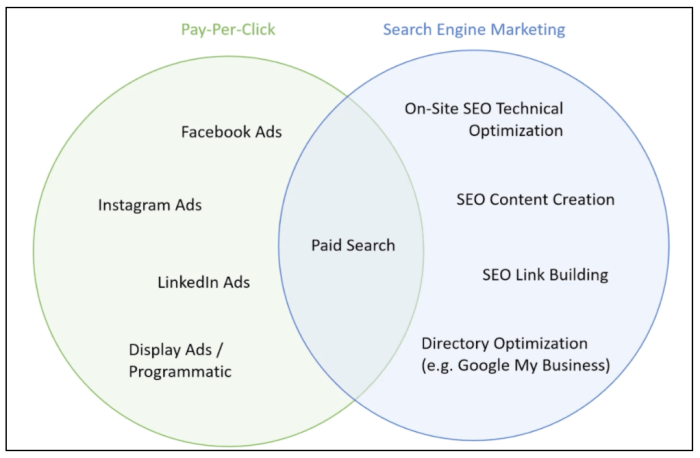
In the rapidly evolving digital landscape, effective search engine marketing (SEM) strategies are crucial for businesses looking to enhance their online presence. One of the most significant components of SEM is the utilization of content clusters, which not only improve organic search rankings but also bolster paid advertising efforts. By leveraging content clusters, brands can establish topic authority and ensure their messaging resonates with target audiences.Content clusters play a vital role in search engine marketing by organizing content around central themes or topics.

This hierarchy of information allows search engines to better understand the context and relevance of web pages, which can lead to improved rankings for both organic and paid search results. When a website demonstrates authority on a particular subject, it increases the likelihood of attracting qualified traffic and converting visitors into customers.

Integration of Content Clusters into Paid Advertising Campaigns

Integrating content clusters into paid advertising campaigns can enhance their effectiveness and maximize return on investment (ROI). Here are some key methods to achieve this:

  • Alignment: Ensure that the s used in paid ads align with the topics covered in your content clusters. This alignment helps in creating a cohesive message that resonates with users searching for relevant information.
  • Dynamic Landing Pages: Create landing pages based on the specific content clusters. This approach ensures that users who click on the ads are taken to highly relevant pages, providing a better user experience and increasing conversion rates.
  • Remarketing Strategies: Utilize remarketing ads targeted towards users who have engaged with content within your clusters. This method reinforces messaging and encourages users to return for further exploration.
  • A/B Testing: Experiment with different ad copy and visuals that reflect the topics within your content clusters. A/B testing can provide insights into what resonates best with your audience, enabling you to refine your approach.

Each of these methods harnesses the strength of content clusters to create a more integrated and effective search engine marketing strategy.

Examples of Successful Search Engine Marketing Using Content Authority Strategies

Several brands have effectively incorporated content authority strategies into their search engine marketing efforts to achieve outstanding results. One notable example is HubSpot, which has tailored its SEM approach around comprehensive content clusters. By publishing in-depth articles that cover various aspects of inbound marketing, they have positioned themselves as a leader in the field. This strategy not only draws organic traffic but also enhances their PPC campaigns, as ads link directly to detailed, authoritative content.Another example is Moz, a well-known provider of tools and resources.

They have successfully employed content clusters to dominate search results for -related queries. By structuring their content around specific s and topics, they have built a strong presence in both organic search and paid advertising, showcasing their expertise and driving significant traffic to their website.These examples illustrate how leveraging content authority through structured content clusters can lead to successful search engine marketing initiatives, benefiting both organic and paid search strategies.

Social Media and Content Clusters

Content clusters and topic authority

Content clusters play a pivotal role in optimizing social media marketing strategies. By organizing related content around a central theme, brands can not only improve their search engine visibility but also enhance their social media presence. When effectively utilized, content clusters can drive traffic, boost engagement, and create a cohesive narrative across various platforms.The integration of content clusters into social media marketing can amplify brand messages and facilitate audience engagement.

This approach allows marketers to share interconnected content that resonates with their target demographics, ultimately fostering a sense of community and encouraging sharing among users. Positioning content clusters strategically can lead to a more engaged following and higher conversions.

Enhancing Social Media Marketing with Content Clusters

Incorporating content clusters into social media marketing efforts can yield significant benefits. Here are some ways content clusters enhance social media strategies:

  • Consistent Messaging: By sharing content that revolves around a central theme, brands can ensure their messaging is cohesive across all social media channels. This consistency reinforces brand identity and builds trust with the audience.
  • Increased Shareability: Interconnected topics and content pieces encourage users to share multiple related posts. This can lead to a higher overall reach and improved brand visibility.
  • Improved Engagement: Content clusters provide opportunities for deeper engagement with followers as they explore various facets of a topic. This can include discussions, comments, and interactions that enhance community building.
  • Benefits: Sharing clustered content on social media can drive traffic back to a website, boosting its search engine ranking through increased backlinks and user engagement.

Creating a strategy for promoting content clusters on social networking platforms involves several steps. First, it is essential to identify the key themes and topics that resonate with the target audience. Once established, these topics can be promoted through tailored posts and campaigns across various platforms.

Strategy for Promoting Content Clusters on Social Media

A comprehensive strategy for sharing content clusters includes several essential components:

1. Identify Core Topics

Research and determine the main themes that align with your brand and audience interests.

2. Content Creation

Develop high-quality content (articles, videos, infographics) around each core topic, ensuring they link back to a pillar page or main piece.

3. Platform Selection

Choose social media platforms that best reach your audience. For example, LinkedIn may be suitable for B2B content, while Instagram or TikTok might be ideal for B2C.

4. Scheduled Posts

Create a content calendar to regularly share posts that promote various aspects of the content clusters, ensuring a steady flow of information.

5. Engagement Tactics

Utilize polls, questions, and call-to-action statements to encourage interaction with your content. This can also help in gathering feedback and insights from your audience.

6. Monitor and Adjust

Regularly analyze user engagement and traffic metrics to determine what content resonates most. Adjust your strategy based on these insights to enhance effectiveness.

Metrics to Measure the Impact of Content Clusters

Measuring the success of content clusters in social media marketing requires the identification of key metrics. Evaluating these metrics allows brands to understand the effectiveness of their strategies and adjust them accordingly.The following metrics should be considered when assessing the impact:

  • Engagement Rate: This includes likes, shares, comments, and overall interaction with the content. A higher engagement rate indicates that the audience finds the content valuable.
  • Traffic to Website: Tracking the number of visitors coming from social media to the content cluster pages can provide insights into the effectiveness of social media promotions.
  • Follower Growth: A steady increase in followers can indicate that the content is resonating with the audience and driving interest in the brand.
  • Click-Through Rate (CTR): Measuring how often people click on links to the content clusters from social media posts can indicate the effectiveness of call-to-action strategies.

By strategically integrating content clusters into social media efforts, brands can create a more engaging and cohesive online presence that drives traffic and builds strong community connections.

Final Thoughts

Content clusters and topic authority

To summarize, mastering content clusters and establishing topic authority can significantly enhance your online presence and marketing strategies. By integrating these elements into your content and social media efforts, you not only improve your search engine ranking but also foster deeper connections with your audience, ultimately driving more engagement and conversions.

FAQ Overview

What are content clusters?

Content clusters are groups of related content that revolve around a central topic, designed to improve search engine optimization and user experience.

How do content clusters affect ?

They enhance by organizing content in a way that search engines find easier to index, improving your site’s authority and rankings.

Can content clusters help with social media marketing?

Yes, they can provide a structured way to share related content on social media, increasing engagement and driving traffic to your site.

What are best practices for creating content clusters?

Best practices include identifying core topics, linking related articles, and optimizing content for relevant s.

How often should I update my content clusters?

Regular updates are essential to maintain relevance; consider revisiting your clusters every few months to ensure they reflect current information.

Core Web Vitals optimization guide for better performance

Core Web Vitals optimization guide

As the Core Web Vitals optimization guide takes center stage, this opening passage beckons readers into a world crafted with valuable insights, ensuring a reading experience that is both absorbing and distinctly original.

Core Web Vitals encompass essential metrics that determine the user experience on your website. Understanding how these metrics—Largest Contentful Paint, First Input Delay, and Cumulative Layout Shift—affect site performance is crucial for digital success. This guide will illuminate actionable strategies for optimizing these metrics, ultimately leading to improved engagement and satisfaction for visitors.

Understanding Core Web Vitals

Core Web Vitals optimization guide

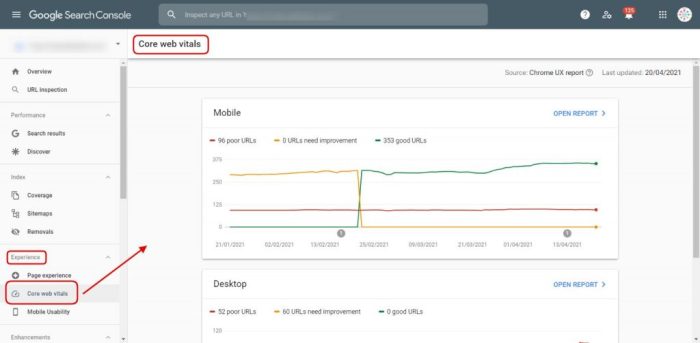
Core Web Vitals are essential metrics that Google uses to assess the overall user experience of a website. These metrics focus on three key performance indicators: Largest Contentful Paint (LCP), First Input Delay (FID), and Cumulative Layout Shift (CLS). By understanding and optimizing these factors, website owners can significantly enhance user satisfaction and site performance.The three key metrics have distinct roles in determining how users experience a web page.

LCP measures loading performance, FID gauges interactivity, and CLS evaluates visual stability. Each of these metrics has a direct impact on user engagement and retention. A website that loads slowly, is unresponsive, or shifts unexpectedly can frustrate users, leading to higher bounce rates and diminished conversions.

Largest Contentful Paint (LCP)

Largest Contentful Paint is a crucial metric that measures the time it takes for the largest visible content element on the page to load. This typically includes images, videos, or any substantial text block. A fast LCP enhances the perception of speed and efficiency, which is vital for user satisfaction. For example, when an online store’s main product image takes too long to load, users may choose to leave the site out of frustration, impacting sales.

Optimizing LCP can involve strategies such as:

  • Optimizing images for size and format to ensure quicker loading times.
  • Leveraging browser caching to serve previously requested content faster.
  • Minifying CSS and JavaScript to eliminate unnecessary code that might slow down rendering.

First Input Delay (FID)

First Input Delay measures the time it takes for a user to interact with a page and see a response. This interaction could be clicking a button, tapping a link, or using any actionable element on a page. A low FID is critical as it indicates a smooth and responsive user experience.For instance, if a user clicks on a “Buy Now” button and the website takes several seconds to respond, the user may feel that the website is lagging or broken, leading to frustration.

Strategies to improve FID include:

  • Reducing JavaScript execution time to ensure quicker responses to user actions.
  • Deferring non-essential scripts so that they do not block the main thread.
  • Using web workers to handle background tasks without interfering with the user’s interaction.

Cumulative Layout Shift (CLS)

Cumulative Layout Shift is a metric that quantifies the visual stability of a webpage. It measures how much the page layout shifts during loading, which can lead to a disorienting experience for users. A high CLS score indicates that elements on the page are moving around, which can impact usability and readability.For example, if a user is about to click on a link and the page shifts, it could lead them to click on an unintended element, resulting in frustration or navigation errors.

To reduce CLS, consider the following methods:

  • Always include dimensions for images and video elements to reserve space before they load.
  • Avoid inserting new content above existing content unless it is in response to user interaction.
  • Use CSS aspects to maintain layout stability during dynamic content loading.

Tools for Measuring Core Web Vitals

To effectively measure and analyze Core Web Vitals, several tools are available that provide insights into how your site performs. Each tool can help identify areas needing improvement and track performance over time. Some of the most popular tools include:

  • Google PageSpeed Insights: Analyzes a webpage and provides specific suggestions for improving LCP, FID, and CLS.
  • Google Lighthouse: An open-source tool that audits site performance, accessibility, and , giving detailed reports on Core Web Vitals.
  • Web Vitals Chrome Extension: A simple tool that provides real-time feedback on Core Web Vitals as users interact with your site.

By utilizing these tools, webmasters can gain visibility into their website’s performance and make informed decisions to enhance user experience based on hard data.

Strategies for Optimization

To enhance your website’s performance, focusing on the three key metrics of Core Web Vitals is essential. Implementing effective strategies to improve Largest Contentful Paint (LCP), First Input Delay (FID), and Cumulative Layout Shift (CLS) can significantly enhance user experience and search rankings. Below are actionable steps and best practices designed to optimize these vital components.

Improving Largest Contentful Paint

Largest Contentful Paint measures the loading performance of a webpage, specifically how long it takes for the largest visible content element to render. Reducing LCP is crucial for providing a fast and efficient user experience. Here are some actionable steps:

  • Optimize Images: Compress and serve images in next-gen formats (like WebP) to reduce their size without sacrificing quality. Utilize responsive images to ensure they load correctly on various devices.
  • Implement Lazy Loading: Prioritize loading above-the-fold content first. Use lazy loading for images and videos further down the page, which helps decrease initial load times.
  • Minimize Server Response Times: Use a reliable hosting service and optimize your back-end processes. Consider using a Content Delivery Network (CDN) to reduce latency by serving content closer to users.
  • Reduce JavaScript and CSS Blocking: Defer loading non-critical JavaScript and CSS files to prioritize essential content rendering. This helps to minimize delays in displaying the main content.

Reducing First Input Delay

First Input Delay measures the time it takes for a user to interact with a page (such as clicking a button) and receiving a response from the browser. A low FID is vital for an optimal user experience. Here’s a list of best practices to reduce FID:

  • Minimize JavaScript Execution: Optimize and reduce the size of JavaScript files to allow for faster execution. Use code-splitting to load only the necessary scripts for each page.
  • Reduce Main Thread Work: Limit tasks that block the main thread, such as heavy computations or excessive DOM manipulations. Utilize web workers for offloading intensive tasks.
  • Preload Key Resources: Use ` ` for important scripts and fonts to ensure they are loaded earlier in the process, improving responsiveness when users interact.

Minimizing Cumulative Layout Shift

Cumulative Layout Shift measures the visual stability of a webpage, indicating how often content shifts during loading. Minimizing CLS is essential for maintaining a smooth and predictable user experience. The following techniques can help achieve this:

  • Specify Size for Images and Videos: Always define width and height attributes for images and videos to reserve space before they load, preventing shifts as content appears.
  • Include Dimension Attributes for Ads: If you display ads, ensure they have defined dimensions to prevent layout shifts when they load.
  • Avoid Inserting Content Above Existing Content: Maintain the order of content. If new content is added, place it below the existing content to minimize unexpected shifts.
  • Use CSS for Layout Shifts: Employ CSS properties like `min-height` for containers that may have dynamic content, ensuring consistent spacing during loads.

Related Concepts in Digital Marketing

In today’s digital landscape, understanding Core Web Vitals is essential not just for enhancing user experience, but also for effectively driving business goals. These metrics are intrinsically linked to broader digital marketing strategies, particularly in relation to search engine marketing (SEM), trends, and social media engagement. Recognizing these connections can help businesses optimize their online presence holistically.

Core Web Vitals and Search Engine Marketing

Core Web Vitals have a direct impact on search engine marketing efforts. These metrics – Largest Contentful Paint (LCP), First Input Delay (FID), and Cumulative Layout Shift (CLS) – measure crucial aspects of user experience. Google has made it clear that these factors play a vital role in search rankings. Advertisers must ensure that their landing pages not only convert well but also meet the performance standards set by these metrics.

“Websites that prioritize user experience are more likely to achieve higher ad quality scores, leading to better placement and lower costs per click.”

An efficient SEM strategy benefits greatly from improved Core Web Vitals. By lowering bounce rates and increasing user satisfaction, businesses can expect better return on investment (ROI) from their advertising spend.

Influence of Internet and Trends on Core Web Vitals Performance

Continuously evolving Internet and trends have a significant impact on how Core Web Vitals are perceived and implemented. For instance, with the rise of mobile-first indexing, sites that are not optimized for mobile devices will struggle with performance scores. As users have shifted towards a preference for faster, more responsive websites, search engines have adjusted their algorithms to reward sites that excel in Core Web Vitals.

The following points illustrate how these trends shape performance:

  • Increasing emphasis on mobile optimization, leading to higher expectations for load speeds.
  • Adoption of progressive web apps (PWAs) that inherently improve user experience.
  • Growth in video content, which requires careful management to avoid negatively impacting loading times and CLS.

Companies that stay ahead of these trends can ensure compliance with Core Web Vitals, thus maintaining favorable search engine rankings.

Impact of Social Media and Networking on User Engagement Metrics

Social media platforms play a critical role in driving traffic to websites, making it essential for businesses to optimize their Core Web Vitals. Effective social media campaigns can significantly affect user engagement metrics such as click-through rates and average session durations.When users find a website through social media links, their initial impressions are often influenced by the page’s loading speed and visual stability.

A seamless experience can lead to higher engagement and sharing rates.

“Effective social media strategies hinge on the website’s ability to provide an engaging and fast user experience.”

The following aspects showcase the interplay between social media and Core Web Vitals:

  • Social media traffic often leads to diverse visitor profiles, necessitating adaptable website performance.
  • High engagement on social media can enhance direct traffic to sites, improving overall performance metrics.
  • Negative feedback on social media regarding slow websites can harm brand reputation and reduce traffic.

By prioritizing Core Web Vitals, businesses can maximize user engagement from social media referrals, ultimately leading to better overall performance in their digital marketing initiatives.

Epilogue

Core Web Vitals optimization guide

In conclusion, mastering Core Web Vitals is more than just a technical requirement; it’s a gateway to enhancing user experience and boosting your site’s visibility in search rankings. By implementing the strategies Artikeld in this guide, you’ll be well-equipped to create a smoother, faster, and more engaging online environment for your audience.

FAQ Overview

What are Core Web Vitals?

Core Web Vitals are a set of three important metrics that measure the user experience on a website, specifically focusing on loading performance, interactivity, and visual stability.

How can I measure Core Web Vitals?

You can measure Core Web Vitals using tools like Google PageSpeed Insights, Lighthouse, or the Web Vitals Chrome extension, which provide insights into how your site performs regarding these metrics.

Why are Core Web Vitals important?

Core Web Vitals are important because they directly influence user experience, which can affect engagement, conversion rates, and your site’s rankings in search results.

Can I improve Core Web Vitals on my own?

Yes, many optimizations can be implemented independently, such as optimizing images, leveraging browser caching, and improving server response times.

How often should I check my Core Web Vitals?

It’s advisable to check your Core Web Vitals regularly, especially after making changes to your website or launching new content, to ensure ongoing performance optimization.

AI tools for SEM automation and enhancing strategies

AI tools for SEM automation

As AI tools for SEM automation take center stage, they revolutionize how marketers approach search engine marketing. The integration of artificial intelligence into SEM tasks not only streamlines efforts but also significantly boosts effectiveness. From optimizing bids to enhancing strategies, AI tools are becoming indispensable in creating high-performing campaigns.

This discussion delves into the vital role of AI in automating SEM tasks, highlights popular tools that are reshaping campaigns, and explores their benefits in bid management and optimization. Furthermore, we will touch upon how these tools can seamlessly integrate with existing platforms while ensuring robust security and data privacy.

AI Tools for SEM Automation

The integration of artificial intelligence into Search Engine Marketing (SEM) has revolutionized the way marketers optimize their campaigns. By automating repetitive tasks and providing insights derived from vast data sets, AI tools streamline the SEM process, allowing marketers to focus on strategy and creativity. This shift not only enhances efficiency but also improves campaign performance and ROI.AI plays a significant role in automating various SEM tasks, including research, ad targeting, and bid management.

These tools analyze data patterns to make real-time adjustments, ensuring that ads reach the right audience at the right time. For example, AI algorithms can automatically adjust bids based on the likelihood of conversion, maximizing budget efficiency.

Popular AI Tools Enhancing SEM Campaigns

Several AI tools have emerged as leaders in enhancing SEM campaigns. Each tool offers unique features designed to facilitate different aspects of SEM.

  • Google Ads Smart Bidding: This feature utilizes machine learning to optimize bids for conversions or conversion value in each auction, adapting bids in real-time based on various factors like device, location, and time of day.
  • WordStream: This tool provides suggestions for optimizing ad campaigns through insights and offers performance tracking, making it easier for marketers to adjust campaigns based on data-driven recommendations.
  • Optmyzr: Known for its automation capabilities, Optmyzr offers features like One-Click Optimizations and custom reporting to streamline account management and improve campaign performance.
  • SEMrush: Primarily a research tool, SEMrush incorporates AI to analyze competitors’ s and strategies, helping marketers find opportunities for their campaigns.

The benefits of using AI for bid management and optimization are numerous and impactful. By leveraging AI, marketers can achieve more precise bidding strategies that adapt to market trends and user behavior.

Benefits of AI for Bid Management and Optimization

Implementing AI in bid management and optimization leads to enhanced efficiency and effectiveness in SEM campaigns. Some key benefits include:

  • Real-time Adjustments: AI continuously analyzes data and adjusts bids in real-time, ensuring ads remain competitive without overspending.
  • Improved Targeting: By analyzing user behavior and engagement patterns, AI tools help identify the most effective s and target demographics, leading to higher conversion rates.
  • Time Savings: Automating bid management allows marketers to focus on strategic decisions rather than spending time on manual adjustments.
  • Data-Driven Decisions: AI provides insights based on large datasets, enabling marketers to make informed decisions regarding which s to prioritize and how to allocate budgets.

“AI-driven SEM tools not only enhance performance but also empower marketers to think strategically and creatively.”

As companies increasingly rely on data-driven approaches, the role of AI in SEM automation is becoming more crucial. The future of SEM is undoubtedly intertwined with advancements in AI technology, promising an even more sophisticated marketing landscape.

Integration of AI Tools with Internet and Security

AI tools for SEM automation

The integration of AI tools within the realm of digital marketing is not just about enhancing performance; it also plays a pivotal role in bolstering security measures. As businesses increasingly rely on digital channels, safeguarding sensitive data and ensuring secure transactions have become paramount. AI tools facilitate this through advanced threat detection, automated monitoring, and improved risk assessment strategies.AI tools can significantly enhance security measures in digital marketing through the implementation of predictive analytics and anomaly detection.

These capabilities allow for real-time monitoring of user behavior and digital transactions, effectively identifying potential security breaches before they escalate. Moreover, AI-driven algorithms can analyze vast amounts of data, identifying patterns and inconsistencies that may indicate fraudulent activities or security threats.

Methods for Integration of AI Tools with Existing SEM Platforms

Integrating AI tools with existing SEM platforms requires a strategic approach to ensure both effectiveness and security. By following these methods, businesses can enhance their security posture without compromising performance:

1. API Integrations

Utilize APIs to seamlessly connect AI tools with existing SEM platforms. This enables real-time data exchange and enhances the functionality of marketing campaigns.

2. Data Encryption

Ensure that all data transmitted between AI tools and SEM platforms is encrypted. This protects sensitive information from potential interception during transit.

3. Regular Security Audits

Conduct periodic audits to assess the security measures in place during the integration process. This helps in identifying vulnerabilities and making necessary adjustments promptly.

4. User Access Controls

Implement strict user access controls to limit the number of individuals who can access sensitive data. This minimizes the risk of internal breaches.

5. Training and Awareness

Provide training for team members on the importance of security in digital marketing and the role of AI tools. Awareness programs can significantly reduce human errors that lead to security breaches.By adopting these methods, organizations can effectively integrate AI tools into their SEM practices while ensuring robust security measures are maintained.

Implications of AI on Data Privacy in Marketing Automation

The use of AI in marketing automation has significant implications for data privacy. As AI tools collect and analyze vast amounts of consumer data, the potential for breaches and misuse increases. Organizations must navigate the delicate balance between leveraging consumer data for targeted marketing and respecting individual privacy rights.To address these concerns, businesses should consider implementing the following practices:

Compliance with Regulations

Ensure adherence to data protection regulations such as GDPR and CCPA. This includes obtaining explicit consent from users before collecting their personal information.

Transparent Data Practices

Maintain transparency about how consumer data is being used and processed. Clear communication fosters trust and encourages user engagement.

Data Minimization

Adopt a policy of collecting only the data necessary for marketing purposes. This reduces the risk associated with handling excessive amounts of sensitive information.

Regular Data Anonymization

Implement strategies for anonymizing data to protect consumer identities. This approach allows businesses to analyze trends without directly associating data with individuals.Through understanding and addressing these implications, organizations can leverage AI in their marketing efforts while maintaining a strong commitment to data privacy.

AI Tools in Social Media and Site Promotion

The integration of AI tools in social media management and site promotion has revolutionized the way brands engage with their audiences. By leveraging advanced algorithms and data analytics, these tools streamline processes, enhance user engagement, and optimize content strategies. This discussion explores various AI tools specifically designed for social media management and promotion, highlights the effectiveness of AI-driven content recommendations, and delves into the role of AI in social bookmarking strategies for increasing visibility.

Comprehensive List of AI Tools for Social Media Management and Promotion

The following AI tools have gained popularity for their capabilities in managing social media campaigns, automating posts, and analyzing audience interactions. These tools empower marketers to understand their audience better and tailor content accordingly.

  • Hootsuite: An all-in-one platform that allows users to schedule posts, monitor social media interactions, and analyze performance metrics using AI-driven insights.
  • Buffer: This tool utilizes AI to suggest optimal posting times and generate reports on engagement, helping brands refine their strategies.
  • Sprout Social: Sprout Social combines social media management with powerful analytics, assisting businesses in understanding audience sentiment and engagement through AI analysis.
  • Canva: While primarily a design tool, Canva uses AI to recommend design elements and templates tailored for social media, enhancing visual content creation.
  • BuzzSumo: BuzzSumo’s AI algorithms analyze trending topics, helping marketers discover content that resonates with their audience, thus boosting social media promotion efforts.
  • SocialBee: This tool helps in creating a content calendar and automates posting while using AI to recommend content categories based on audience preferences.
  • AdEspresso: Focused on Facebook and Instagram ads, AdEspresso employs AI to optimize ad placements and targeting, enhancing campaign performance.

Effectiveness of AI-Driven Content Recommendations

AI-driven content recommendations have shown significant effectiveness in promoting sites by enhancing user engagement and improving conversion rates. These recommendations analyze user behavior and preferences, allowing brands to deliver personalized content tailored to individual needs.The effectiveness arises from the ability of AI systems to process vast amounts of data to identify patterns that often go unnoticed by humans. For instance, platforms like Netflix and Spotify utilize AI to suggest content that aligns with users’ viewing or listening history, leading to increased interaction and satisfaction.

“Personalized experiences powered by AI can lead to a 20% increase in engagement rates.”

Moreover, AI tools like Persado and Phrasee use natural language processing (NLP) to craft compelling copy that resonates with target audiences, further enhancing the effectiveness of promotional strategies.

Use of AI in Social Bookmarking Strategies

Social bookmarking is a strategic approach for increasing content visibility and driving traffic to websites. AI tools enhance this strategy by intelligently curating and promoting relevant content across various platforms.The incorporation of AI allows marketers to analyze trending topics and user interests, facilitating the selection of bookmarks that are likely to gain traction. AI-driven tools like Pocket and Raindrop utilize algorithms to categorize and suggest bookmarks based on user behavior and preferences.

Additionally, AI can automate the sharing of these bookmarks across social media channels at optimal times, maximizing their visibility. The use of AI in social bookmarking can lead to increased traffic and improved brand recognition, as it ensures that content reaches the right audience at the right moment.In summary, the integration of AI tools in social media management and promotion not only streamlines processes but also enhances engagement through personalized content recommendations and effective bookmarking strategies, ultimately driving increased visibility and success in digital marketing efforts.

Final Summary

AI tools for SEM automation

In summary, AI tools for SEM automation represent a pivotal shift in digital marketing, allowing for more precise targeting and enhanced operational efficiency. As marketers embrace these technologies, they not only improve their campaign outcomes but also adapt to the evolving digital landscape. The future of SEM is undoubtedly intertwined with AI, paving the way for innovative strategies and unprecedented growth.

Query Resolution

What are the main benefits of using AI tools for SEM?

AI tools enhance efficiency, optimize bids, improve targeting, and provide insights that drive better decision-making.

How do AI tools ensure data privacy in SEM?

AI tools often incorporate security measures like encryption and comply with data protection regulations to safeguard user information.

Can AI tools be integrated with existing SEM platforms?

Yes, many AI tools are designed to integrate seamlessly with existing SEM platforms, enhancing their functionality without major disruptions.

What types of AI tools are commonly used for bid management?

Common tools include automated bidding systems that analyze data and adjust bids in real-time to maximize results.

How can AI tools assist with optimization?

AI tools can analyze search patterns and competitor strategies to suggest effective s and optimize existing ones for better performance.

PPC bidding strategies in SEM for successful campaigns

PPC bidding strategies in SEM

PPC bidding strategies in SEM is a critical component that shapes the effectiveness of your online advertising efforts. By understanding the various strategies available, marketers can enhance their campaigns and achieve better visibility in search engine results. From manual to automated techniques, there’s a world of possibilities that can significantly impact ROI.

This discussion delves into the different types of bidding strategies, highlighting their importance in search engine marketing. We’ll explore how advanced techniques can optimize campaigns and how integrating these strategies with other digital marketing efforts can elevate your overall marketing game.

PPC Bidding Strategies Overview

PPC (Pay-Per-Click) bidding strategies are essential components of search engine marketing (SEM) that help advertisers optimize their ad spend. As competition for s intensifies, understanding these bidding strategies becomes crucial for achieving desired results while maximizing ROI. By selecting the right approach, advertisers can enhance visibility, control costs, and ultimately drive more conversions.Various PPC bidding strategies cater to different objectives and levels of control.

Advertisers can choose between manual bidding, where they have direct control over bids, automated strategies that leverage algorithms for optimization, and enhanced strategies that combine the two approaches. Each method serves distinct purposes and can significantly influence campaign performance.

Types of PPC Bidding Strategies

Understanding the different types of PPC bidding strategies is vital for selecting the right one based on campaign goals. Here’s a breakdown of the primary strategies utilized in the industry:

  • Manual Bidding: This strategy allows advertisers to set individual bids for each , granting complete control over ad spend. It is particularly effective for those who want to optimize bids based on specific performance metrics. For instance, an e-commerce company may adjust bids for high-performing s to maximize visibility during peak shopping times.
  • Automated Bidding: Automated strategies use machine learning algorithms to adjust bids in real-time based on predefined goals. Google Ads’ Target CPA (Cost-Per-Acquisition) is a popular example, where the system optimizes bids to achieve the desired cost per conversion. This approach is beneficial for advertisers looking to save time and adapt quickly to market changes.
  • Enhanced CPC (Cost-Per-Click): This strategy allows for adjustments to manual bids based on the likelihood of conversion. Enhanced CPC automatically increases or decreases bids for clicks that seem more likely to result in a sale. For example, a travel agency could use Enhanced CPC to raise bids during times when users are more likely to book trips, such as weekends or holiday seasons.

  • Target ROAS (Return on Ad Spend): This strategy is focused on maximizing revenue relative to the ad spend. Advertisers set a target return, and the automated system adjusts bids to help achieve this goal. A retailer aiming for a 400% ROAS can benefit from this strategy by ensuring that its bids are optimized for high-value conversions.

Real-life campaign examples illustrate the effectiveness of these strategies. A tech startup may employ manual bidding for niche s to maintain control while testing out automated bidding on broader terms. Conversely, a well-established brand might leverage automated strategies to scale its advertising efforts, achieving consistent results with less hands-on management. These diverse approaches enable advertisers to tailor their strategies to meet unique business objectives while navigating the competitive landscape of SEM.

Advanced PPC Techniques

Ppc amazon bidding bid how documentation unlike adwords official there google no

In the competitive landscape of search engine marketing (SEM), leveraging advanced PPC techniques can significantly enhance your campaign’s performance. These methods not only optimize your budget but also align your advertising strategies with specific business goals, ensuring better return on investment (ROI). Implementing these strategies requires a deeper understanding of your audience and campaign objectives.One of the most effective advanced bidding techniques is Target CPA (Cost Per Acquisition).

This method helps advertisers set a specific cost they are willing to pay for each conversion, allowing the system to automatically adjust bids to achieve that target. Additionally, Target ROAS (Return on Ad Spend) enables advertisers to set a desired return based on their ad spend, optimizing bids to maximize revenue. Lastly, managing Impression Share allows advertisers to control how often their ads appear relative to the number of searches, enhancing visibility in competitive s.

Implementation of Advanced Bidding Techniques

To successfully implement these advanced PPC techniques, understanding the following steps is crucial:

1. Set Clear Goals

Define what you want to achieve with your campaign, whether it’s generating leads, increasing sales, or enhancing brand awareness.

2. Select the Right Bidding Strategy

Choose between Target CPA, Target ROAS, or Impression Share based on your campaign objectives. For instance:

Target CPA is ideal for campaigns focused on conversions.

Target ROAS works best for revenue-driven campaigns.

Impression Share is useful for increasing visibility.

3. Utilize Automated Bidding Tools

Platforms like Google Ads offer automated bidding options that use machine learning to optimize bids in real time. This allows for better resource allocation based on performance data.

4. Monitor and Adjust Bids Regularly

Continuous evaluation of your bids based on campaign performance data is essential. Use the platform’s reporting tools to analyze metrics such as conversion rates, cost per click (CPC), and overall ROI.To ensure optimal performance, consider the following best practices for bid optimization:

Analyze Historical Performance Data

Look at past data to identify trends and understand which s or demographics convert best.

Use A/B Testing

Experiment with different bidding strategies to find the most effective one for your specific audience and campaign goals.

Adjust Based on Competition

Keep an eye on competitors and adjust your bids to maintain a competitive edge in your chosen s.

Consider Seasonality and Trends

Adjust your bids according to seasonal trends or changes in market demand, ensuring that your campaigns remain relevant.

“Setting clear goals and continuously monitoring performance is the key to successful PPC bidding.”

By employing these advanced techniques and best practices, you can significantly improve your SEM campaigns, driving better results and maximizing your advertising budget.

Integration with Other Digital Marketing Aspects

The relationship between PPC bidding strategies and other digital marketing avenues is crucial for maximizing overall campaign effectiveness. Understanding how PPC integrates with social media marketing, , and video content can significantly enhance brand visibility and user engagement.

Relationship Between PPC Bidding Strategies and Social Media Marketing

PPC advertising complements social media marketing by allowing brands to strategically target specific audiences on platforms like Facebook, Instagram, and LinkedIn. The integration of PPC in social media helps drive traffic, boost brand awareness, and improve conversion rates. Here are key aspects of this relationship:

  • Targeted Advertising: PPC campaigns provide detailed targeting options based on user demographics, interests, and behaviors. This means ads can reach the most relevant audience, increasing the likelihood of engagement.
  • Retargeting Opportunities: Using PPC on social media allows for retargeting users who have previously interacted with the brand, effectively bringing back potential customers who may have shown interest.
  • Campaign Synergy: Coordinating PPC efforts with organic posts can enhance overall visibility. By promoting high-performing posts with PPC, brands can boost their reach and engagement rates.

PPC Complementing Efforts in Site Promotion and Content Visibility

PPC and work hand-in-hand to enhance site promotion and content visibility. While focuses on organic traffic through search engine rankings, PPC provides immediate visibility and traffic. The combination of both strategies creates a balanced approach to online marketing. Important points include:

  • Insights: PPC campaigns can provide valuable data on which s drive the most traffic and conversions. This information can inform strategies for optimizing content.
  • Increased Visibility: Running PPC ads alongside organic search results can increase overall visibility on search engine results pages (SERPs), leading to higher click-through rates.
  • Test and Refine: PPC allows marketers to test different headlines, descriptions, and landing pages quickly. The insights gained can enhance efforts by applying winning strategies to organic content.

Impact of Video Marketing and Design Choices on PPC Performance and User Engagement

Video marketing has become a powerful tool in enhancing PPC performance and user engagement. Engaging video content can capture attention and drive action more effectively than static ads. Important considerations include:

  • Engagement Rates: Video ads generally have higher engagement rates compared to image or text ads. Users are more likely to watch, share, and respond to video content.
  • Enhanced Messaging: Video allows for more dynamic storytelling and can convey complex messages more easily, making it a compelling choice for PPC campaigns.
  • Design Choices Matter: The design and quality of video content significantly impact its effectiveness. High-quality visuals, clear calls to action, and well-structured narratives enhance user experience and engagement.

Ultimate Conclusion

PPC bidding strategies in SEM

In conclusion, mastering PPC bidding strategies in SEM not only boosts your campaign’s performance but also complements other marketing channels effectively. By implementing advanced techniques and optimizing based on data, you can ensure your ads reach the right audience. As you explore the potential of these strategies, remember that continuous learning and adaptation are key to sustained success.

FAQ

What is a manual bidding strategy?

A manual bidding strategy allows advertisers to set their own bids for each , giving them full control over their spending.

How does automated bidding work?

Automated bidding uses algorithms to adjust bids automatically based on performance metrics to maximize campaign goals.

What is target CPA in PPC?

Target CPA (Cost Per Acquisition) is a bidding strategy that aims to get as many conversions as possible at or below a specified cost.

How can PPC benefit efforts?

PPC can enhance by driving immediate traffic to your site, which can improve overall visibility and engagement metrics.

What is impression share?

Impression share refers to the percentage of impressions your ads receive compared to the total impressions they could get, indicating your ad’s visibility.